
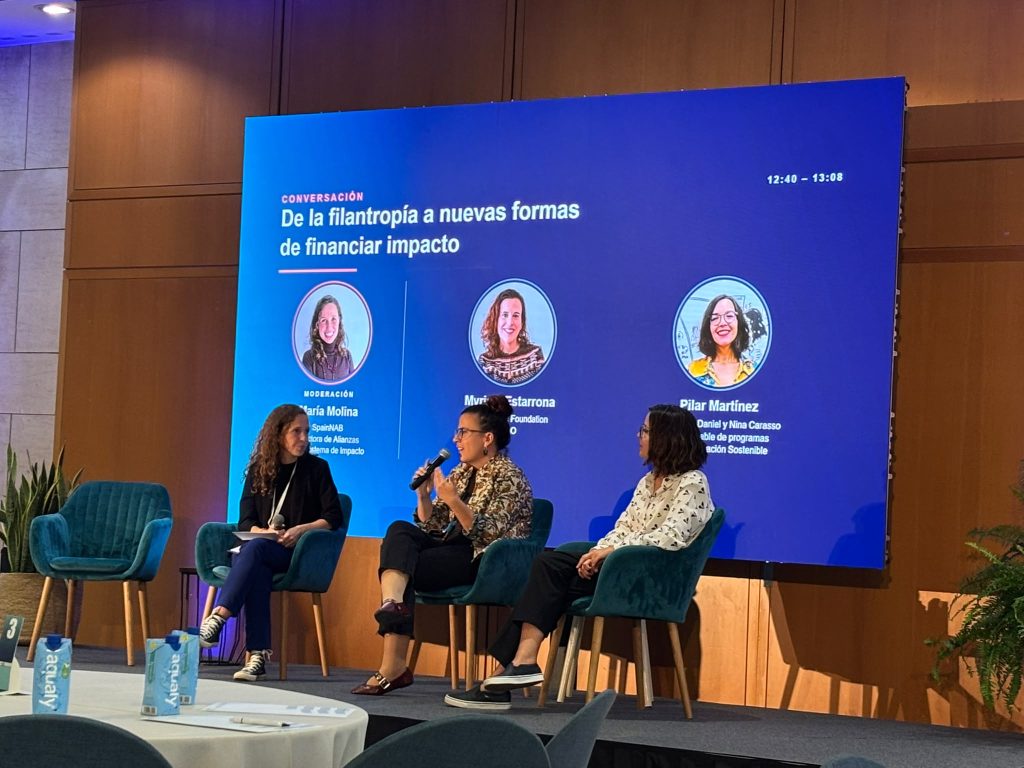
In the context of BARCELONA4IMPACT This week I was able to attend two separate discussions that addressed a shared problem from two complementary angles: how to mobilize and better use capital to create social impact.
During the Impact Forum Ship2B We reflect on how philanthropy has evolved towards new models and the path ahead. And from EDUCO They invited us to discuss innovative funding mechanisms for social impact and international cooperation.
The question underlying both meetings is how to adapt funding to meet the real needs of organizations and how to combine different sources, instruments, and support to achieve sustainable solutions.
From both discussions I learned three lessons:
The focus should not be on the instrument but on the need. It’s not a question of choosing whether we want to make donations or investments; it’s about understanding what each organization really needs during different stages of its development. Sometimes it’s a donation, other times it can be a loan, patient capital or a combination of instruments. The key to the entire process is to start designing the collaboration from the project rather than from the instruments available to us as funders.
Money is often not enough. We always tend to view accompaniment as an additional cost, when in fact it is an important element of financing itself. Strategic support in management, business development, or network building can be the decisive factor in helping to build sustainable organizations.
We need to find joint solutions, not work in silos. Each actor has their own resources, skills, and limitations. Combining philanthropy, impact investing, public funding, and other sources of capital gives us the opportunity to create tailored solutions based on the specific needs of social organizations. And for this to happen, we need to cooperate more among all the actors involved.
If I could highlight just one idea, I would say that financial innovation is not only the creation of new financial products but rather the redefinition of the role of the financier. Improving listening, accepting that there is no universal recipe, and adapting our response are all part of this process of redefining.
At Open Value, we are still discovering how to do this. Since the goal of all this is not simply to finance projects, but to ensure that capital (financial and otherwise) flows in the right direction, at the right time, and under the right conditions to create long-term impact.
